
10 Federal Tax Law · 3 Federal Tax Updates · 2 Regulatory Ethics
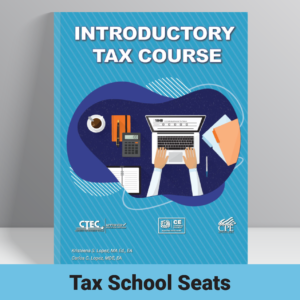
The 2026 Tax Preparation Course is designed to give you the knowledge you need to meet IRS requirements and build a solid understanding of tax law and practice, so you can serve your clients with confidence. The material is organized to give line-by-line instructions for Form 1040, and it includes the latest 2026 tax law changes from the One Big Beautiful Bill Act (OBBBA).
What you’ll be able to do
- Identify the correct filing status and determine qualifying dependents
- Report income, adjustments, and capital gains and losses
- Apply the standard and itemized deductions accurately
- Calculate payments, tax credits, and taxpayer penalties
- Complete Schedule C, Schedule E, and Schedule 2
- Handle extensions, amendments, and e-filing
- Safeguard taxpayer documents and information
- Apply ethical standards in your tax practice
How this course works
Our online training system combines traditional textbook lessons with interactive questions and Practice Tax Returns (PTRs). Each chapter builds on the one before it. After each chapter you complete a Practice Tax Return along with its own set of review questions.
Practice Tax Returns are provided in PDF format and include links to the forms you need to complete a return by hand. Returns that include Schedule A are prepared with state income tax withholding on line 5, along with any applicable state-specific taxes. Each PTR is based on the material covered in its chapter.
Course chapters
- Overview of Form 1040. Get familiar with the main individual tax return, including its structure, sections, and how it fits together.
- Filing status, dependents, and deductions. Learn how to determine the right filing status, who qualifies as a dependent, and how to choose between the standard and itemized deductions.
- Income. Understand the types of taxable income, from wages and tips to interest and dividends, and where each belongs on the return.
- Adjustments to income. Discover above-the-line deductions like student loan interest and IRA contributions that reduce taxable income.
- Other taxes and taxpayer penalties. Learn about additional taxes such as self-employment tax, and the penalties taxpayers may face for underpayment or late filing.
- Payments and tax credits. See how withholding, estimated payments, and credits like the Child Tax Credit and EIC reduce what a taxpayer owes.
- Itemized deductions. Work through Schedule A deductions including mortgage interest, medical expenses, and charitable contributions.
- Capital gains and losses. Learn how to report gains and losses from selling stocks, real estate, and other assets, and how the tax rates apply.
- Depreciation. Understand how to deduct the cost of business assets over time using methods like Section 179 and bonus depreciation.
- Schedule C. Report business income and expenses for self-employed individuals and sole proprietors on the personal return.
- Schedule E. Cover supplemental income from rental properties, partnerships, S corporations, and trusts.
- Extensions, amendments, and electronic filing. Learn how to file Form 4868 for an extension, correct a return with Form 1040-X, and navigate e-filing options.
- Ethics. Review the professional standards and responsibilities tax preparers must follow, including Circular 230.
Final exam. The 2026 Federal Tax Law Final Exam tests your knowledge across all chapters to earn your CE credits.
Course details
| Field of study | Federal Tax Law (10 hrs), Regulatory Ethics (2 hrs), Federal Updates (3 hrs) |
| Course level | Basic |
| Prerequisite | None |
| Delivery method | Self-study |
| CE credit deadline | May 31, 2027 |
| Upon completion | Certificate of Completion |
| IRS credit reporting | CE credits reported directly to the IRS for tax preparers with a valid PTIN |
This course does not qualify for California Continuing Education hours.